
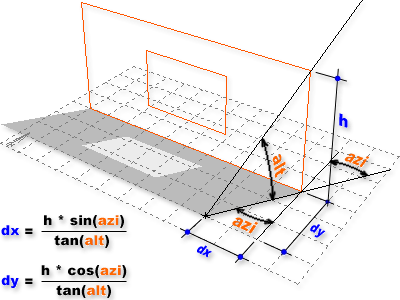
 Now, this rectangular 'wall' is simple, our proposed building was to be of a certain bulk, and we were allowed to design it as a 'stepped' building, say, from two to six stories. Somehow I got through that assignment, but my brain still hurts when I think of it.
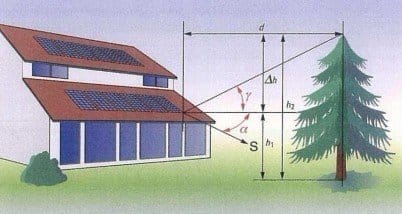 Now, don't get me wrong, I had been designing landscapes for years before I entered grad school, and I knew that the ultimate height and spread of a plant, especially a tree, was crucial to know and factor into the plan. Recently, I was told by someone his home was designed to be passive solar. Oh, I said, you must have a very low heating bill in the winter (he lived in the far north). No, he said, when the home was built in 1977, and he planted a lot of trees on the hill to the south, he didn't realize all those evergreen trees would one day completely shade his house. I think I burst out laughing, but it was in sympathy, not snarkiness. We've all seen examples of landscape/building orientation mistakes like this.
 A good designer needs to be able to think in four dimensions, even if it's just through keen observation and not a firm grasp of mathematics. Which brings me to the point of this blog and how we need to stop for a minute and consider the incredible observational powers,and yes, often with a good bit of math, that our ancestors possessed, especially when it came to calculating the Winter Solstice.
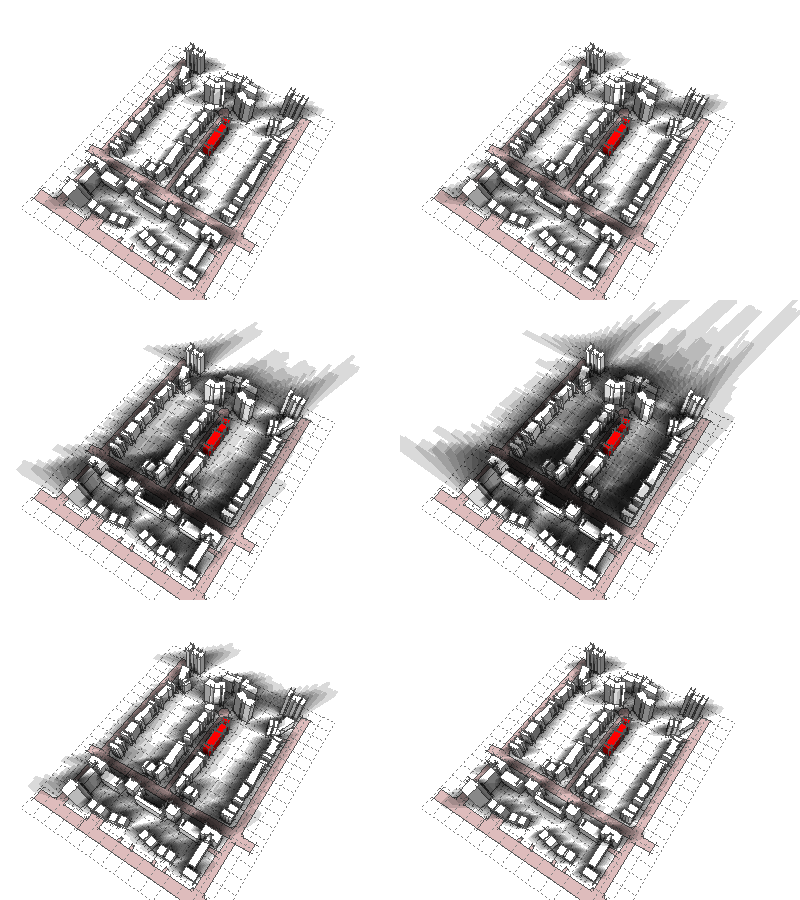
Shadow pattern illustrated on an urban area, showing lengthening and shortening during passage of the day. This is modern landscape architecture, it's not just about plants, it's urban design.
One of the most ancient Winter Solstice sites is New Grange (Newgrange) in Ireland.![newgrange-700[1]](https://anyasgarden.com/wp-content/uploads/2012/12/newgrange-7001.jpg)
Aerial view of Newgrange
The wonder of the illumination of the passage and chamber at Newgrange at the Winter Solstice sunrise has been written about for centuries - but think - this was built before paper and pen, or any sort of writing instrument. All worked out by observation, perhaps some sort of tracking device as simple as a piece of string and a stick in the ground (this is all my speculation).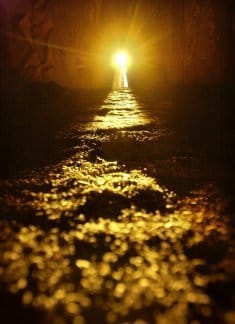 The most important area of Newgrange is the Megalighic Passage Tomb, built around 3200 B.C.
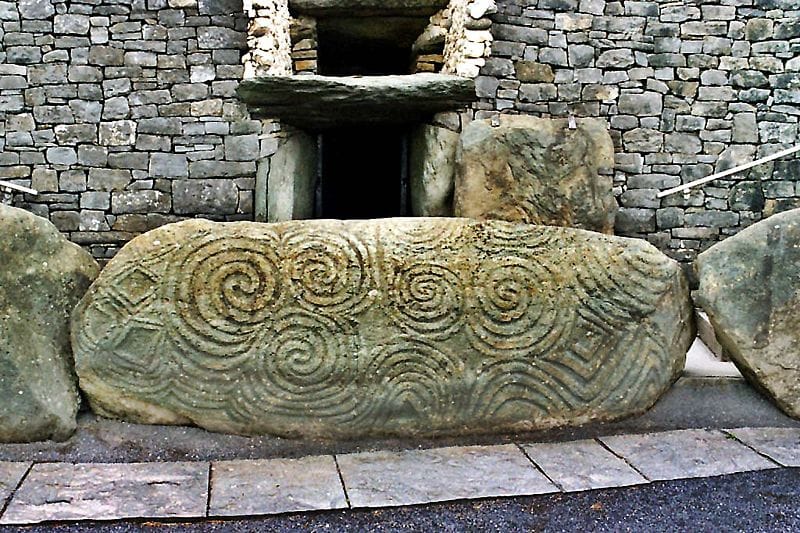
Entrance stone at Newgrange, Ireland
Today's giveaway will be three 1ml sprayers of samples from my perfume line. Your choice of perfume. Leave a comment and you'll be in the drawing, which will be held at 10 a.m. Dec.28th. Winner will be notified by email. Good luck and thank the ancients for their wisdom and optimism!
Anya, I really enjoyed reading this article!! Those drawings feel comforting to me and reminded me of college days =) I really liked the shadow effects as well. It also never ceases to amaze me how ancient people were able to figure things out just by observing nature around them =)
Spirals are a staple of the jewelry I create. I’ve never looked at them as the circle of life. Thanks Anya, I think I’ll keep them in my designs.
I called it Permaculture! 🙂
It’s just amazing!
Amazing. Ireland and perfume. Perfume I visit often, Ireland is a must do bucket-item. Thank you for sharing your knowledge!
Great post. this article is very informative. the information in this blog useful for all. Thanks for sharing with us.
Visiting Ireland is on my bucket list.
I have 8 or 9 different nationalities in my family line, and I have always felt… I guess you could say… “eclectic”, in my spiritual practice. I felt the empty place within me where the presence of a culture would go, and I had to create my own. But I’m very glad I did. Thank you for your generosity, Anya. I do hope I get to try your amazing blends.
Love
Dana
Great informative post and animation. It’s kind of funny that those of us who are math avoiders or even full fledged math-o-phoebics eventually have to do way more calculations than we ever dreamed would be necessary.
All the ancient monuments built around the movement of the sun, stars and moon are amazing to me.
Hi Anya,
Your article reminds me of my first trip to the four corners area of the U.S to visit Chaco Canyon. The people that lived there thrived for over 300 years beginning over 1150 years ago. Their architectural design used astronomy, sacred geometry, landscaping, advanced masonry techniques, water control techniques and engineering that is still quite awe inspiring. On one visit at the Fall Equinox, we were able to walk though some of the ruins guided by the full moon with the haunting echoes of a local Native American musician’s flute. Ah, sweet memories…
Haha! Oh the painful irony of the solar power fail! At least he has plenty of oxygen!
Newgrange sounds like a must visit! I bet those architects spent forever on it back in the day!
Is there a Syracuse in Ireland? I am in Syracuse NY…. Ok North Syracuse, NY now. lol
One of my dreams is to visit Ireland.
My knowledge of Winter solstice is the transition when the days begin to get long again, and on The Summer Solstice sun is at its peak and length of days get shorter. Winter Solstice in some beliefs is when the departure of the Holly King and the arrival of the Oak King…..
🙂
Never had the privilege of smelling or trying any of your perfumes and I will look forward to doing that one day as well.
An article like this makes me yearn for university. There’s something that’s so life-affirming about learning. And I feel that everytime I read one of your blogs. Can’t wait for the next “lesson”.
Lovely, as usual Anya!
I never realized you were at Syracuse? SU or SUNY? I graduated from SU in 1978…we used to joke that no one ever saw a sunrise in Syracuse – they just saw the gloom brighten! Love the article! Sue A.
What a great article! I loved how you linked together the shadow diagrams of today with thoughts of Newgrange. I’m impressed both by what the modern designers and the ancients had to think about!
That’s fascinating, Anya. Wonderful and enlightening article!
Anya, I have enjoyed the wonderful blog on Winter Solstice. So much wonderful information. Thank You lovely lady and absolutely all the best in 2013.
After working so hard. Building,writing,mixising,sharing and giving,its
time for fun and rest.
Thank you dear Anaya for giving and for all your effort.
May you have a beautifull blessed new year,
michal
Oy, Anya I feel for you about the math calculations. That was always the big hesitation for me getting into landscape architecture(or any architecture for that matter). It is totally amazing what our ‘primitive’ ancestors could do. There are somethings that they did that we still don’t know exactly how they did it-Stonehenge, The Great Pyramids, and lesser things, like the way Egyptians wove a cloth with a much higher thread count than we can manage today, and how the ancients got the dye Tyrian purple from mollusks. Of course there are some that say “The aliens did it” LOL!
The Winter Solstice has long been one of my most-sacred days of the year — Halloween is the only day that tops it. I greatly enjoyed learning about Newgrange. Wonderful article!
Anya,
I’m glad that you included Newgrange in this solstice blog! I’d love to own one of your fragrances. Thank you for the giveaway!